AI Video Scene Approval Workflow for Small Teams
Unstructured AI video generation quickly drains computational credits and fractures visual continuity. Learn how to implement a structured three-stage approval pipeline with a single decision owner to streamline your collaborative filmmaking workflow.

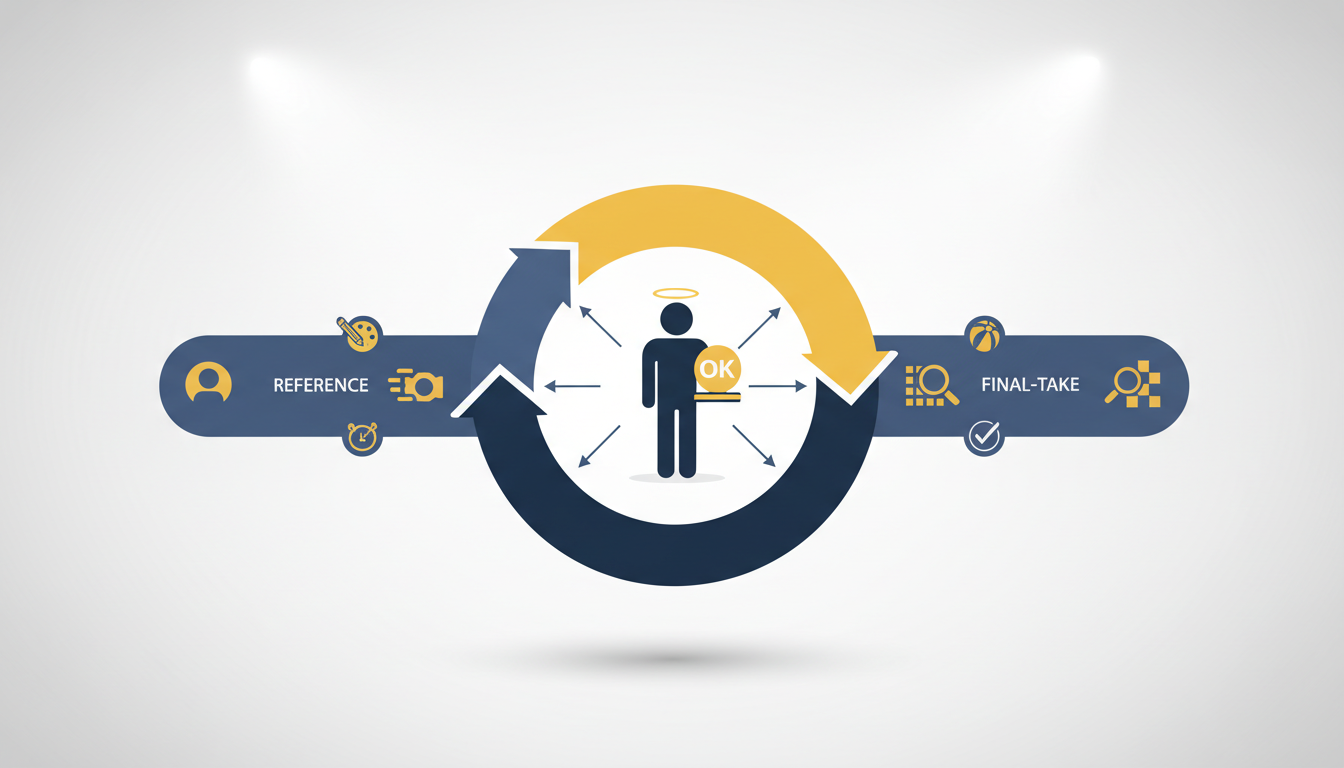
To establish a reliable AI video scene approval workflow, small production teams must transition from traditional post-production methodologies to a structured, three-tiered review pipeline—spanning Reference, Motion, and Final-Take stages—under a single creative decision owner. This approach mitigates the unpredictable nature of generative AI models, preventing computational credit waste and maintaining visual consistency across shots. While this pipeline introduces structured friction, it ensures that small crews align on style, physics, and technical quality before investing in expensive high-resolution upscales.
The Cost of Unstructured AI Video Signoffs
Traditional video review pipelines assume linear editing where assets are static and adjustments are made to timing, color, or sound. In AI filmmaking, however, every render iteration can introduce wild variations in character features, lighting, and environments. Without a designated "Showrunner" or single director to hold veto power, small teams experience "creative drift." Two team members might prompt the same scene in opposite directions, resulting in mismatched visual styles and hundreds of wasted credits on engines like Kling, WAN, or Veo.
Establishing clear boundaries between stylistic approval and motion approval saves valuable resources. When a crew member jumps straight to generating and upscaling high-resolution video without securing style signoffs first, they risk rendering a shot that is fundamentally flawed in prompt direction or character likeness. A single-owner approval system is designed to catch these errors early in the pipeline, helping to align computed frames with the final cut.
The Three-Stage AI Scene Approval Pipeline
To manage render costs and protect visual continuity, small crews should adopt a sequential, three-stage approval process. This framework ensures that no team member generates high-resolution video until the underlying assets and motion dynamics are locked.
Stage 1: Reference and Keyframe Approval
In this initial stage, the objective is to lock in character design, costumes, lighting, and composition using image generation or style-consistent models. Before rendering any video, the creative director must sign off on these static keyframes. This ensures that the visual language is unified across the entire sequence. Once the visual language is locked, teams can map out their production timeline using scene dependency planning to sequence and parallelize shot generation efficiently.
Stage 2: Motion and Physics Review
Once the reference keyframes are approved, the contributor generates low-resolution, low-step video previews to evaluate camera movement, character actions, and physical simulations. The goal here is to check if the AI engine is rendering the correct motion without wasting credits on upscaling. If the camera pans too quickly or the character's movement looks unnatural, the take is rejected or revised at this low-cost stage.
Stage 3: Final-Take and QC Signoff
After the motion is approved, the clip is cleared for high-resolution rendering and upscaling. The final-take stage is a strict quality control (QC) gate. The decision owner reviews the upscaled render for micro-artifacts, flickering, and overall narrative pacing. Only when the shot passes this final check is it cleared for the editing timeline.
Executing the Workflow on Collaborative Platforms
Applying this approval framework practically requires a centralized workspace to avoid fragmented communication across email, chat, and cloud folders. Montagea serves as a collaborative hub—functioning much like GitHub but optimized for AI video production—where teams can write a story, split it into scenes, and invite a crew to render shots.
The workflow begins when the director uses a script-splitting protocol to break down a screenplay into distinct, manageable scenes. Once these scenes are defined, contributors can claim open scenes within Montagea and select the best AI engine for each specific shot. Because different engines can be selected for different shots, the crew can leverage a multi-model pipeline while coordinating their review process. The lead director reviews every submission in the centralized workspace, accepting takes or requesting revisions in real time, which keeps the entire crew aligned without platform fragmentation.
An AI Shot Acceptance Rubric for Small Crews
To remove subjectivity from the signoff process, small crews should evaluate every submission against a standardized, objective rubric. This prevents endless re-renders based on vague creative feedback.
| Evaluation Criteria | Acceptable Threshold | Action on Failure |
|---|---|---|
| Temporal Consistency | Minor background morphing is acceptable if blurred by depth of field; major character face-warping is an immediate reject. | Re-render with stronger character reference weight or seeds. |
| Prompt Adherence | All key narrative elements (e.g., "holding a green book") must be visible and clear. | Adjust text prompts to emphasize missing assets. |
| Asset Fidelity | No catastrophic resolution drops or texture stretching on primary subjects. | Adjust upscale settings or switch to a high-fidelity model. |
| Motion Control | Camera panning and character movements match the storyboard direction without sudden physics breaks. | Re-render using first-and-last-frame guidance. |
For a deeper dive into quality control, teams can reference our comprehensive technical QC checklist and shot acceptance rubric. If a shot fails the motion control check, utilizing precise first-and-last-frame control is often the fastest remedy. We suggest reading our guide on mastering Kling's first and last frame workflow to learn how to lock down unpredictable motion transitions and keep your characters anchored in three-dimensional space.
Who should have final signoff authority in a small AI film crew?
In small crews, a single person—typically the Director or Showrunner—must hold final signoff authority. Allowing multiple team members to approve shots leads to conflicting feedback, creative drift, and wasted render credits.
How do we handle credit allocation when a contributor's render is rejected?
Establishing clear scene specifications and structured review stages can help mitigate credit waste. If a final render is rejected due to a failure to follow the approved Stage 1 reference or Stage 2 motion, the contributor typically absorbs the credit cost. If the rejection is due to a subjective shift in directorial vision after Stage 2 approval, the production budget should cover the re-render.
Can we automate any part of the AI video quality control process?
While automated tools can flag low-resolution exports or severe flickering, evaluating artistic consistency, character likeness, and narrative pacing still requires human review. The three-stage pipeline remains the most reliable framework for small teams.