WaveSpeed Pricing: Calculating the Real Cost of AI Video Production
While dedicated video engines offer powerful rendering, credit-based pricing can quickly escalate during iterative creative processes. We break down the true cost of generation and compare it to flexible orchestration alternatives.
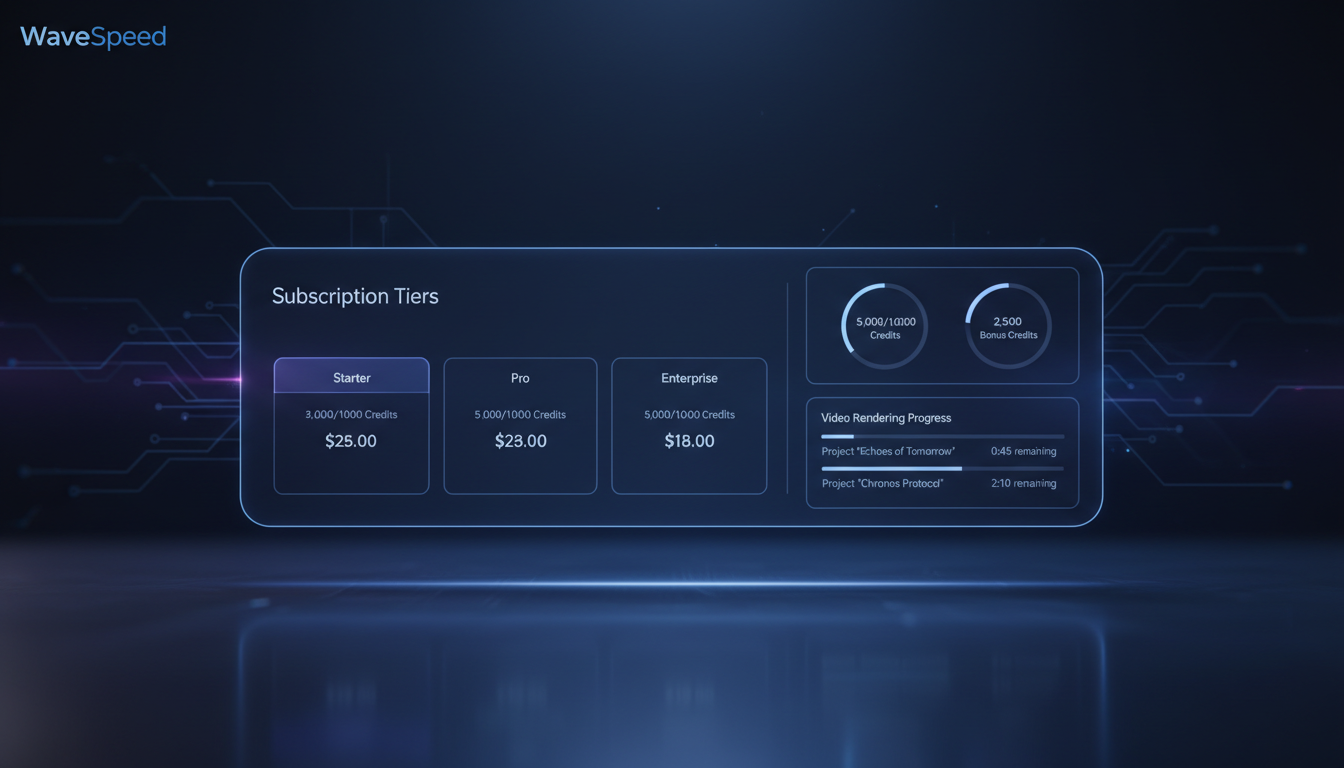
AI video platforms often operate on credit-based subscription models, with plans structured around different usage tiers. While entry-level tiers provide a baseline of monthly credits for standard video generation, the actual cost of a finished, production-ready video minute is often three to five times higher than the nominal rate due to the "iteration tax"—the necessary retakes, prompt adjustments, and motion corrections required to get a usable shot. For teams managing tight production budgets, understanding how credits translate to real-world render seconds is critical before committing to a single-engine subscription.
How Credit Systems and Subscription Tiers Work
Many AI video engines structure their pricing tiers around monthly credit allocations. Entry-level tiers typically serve as the starting point, offering a modest bucket of credits suitable for basic testing. Upgrading to higher tiers generally increases the monthly credit pool, grants faster rendering priority, and unlocks higher output resolutions. Unlike flat-rate software, every generation attempt deducts credits from your balance, meaning your monthly budget is directly tied to your exact render volume.
It is helpful to distinguish this compute-heavy model from other platforms in the AI video space. For those utilizing synthetic presenters, comparing different plan tiers can reveal how workflows differ; for example, you can read about avatar-focused creator and pro plans to see how features scale. With dedicated physics and motion engines, you typically pay for the underlying GPU time required to simulate motion, regardless of whether the final frame matches your creative vision.
Calculating the Real Cost: From Credits to Finished Video Minutes
To budget an AI-driven project accurately, you must look past the theoretical maximum output of a subscription tier. A single short video generation at standard resolution might require a baseline credit amount, while a higher-fidelity generation at a higher frame rate or resolution could require double that amount or more. On paper, a fixed monthly plan suggests a certain volume of video. In practice, creative direction is rarely a single-shot process.
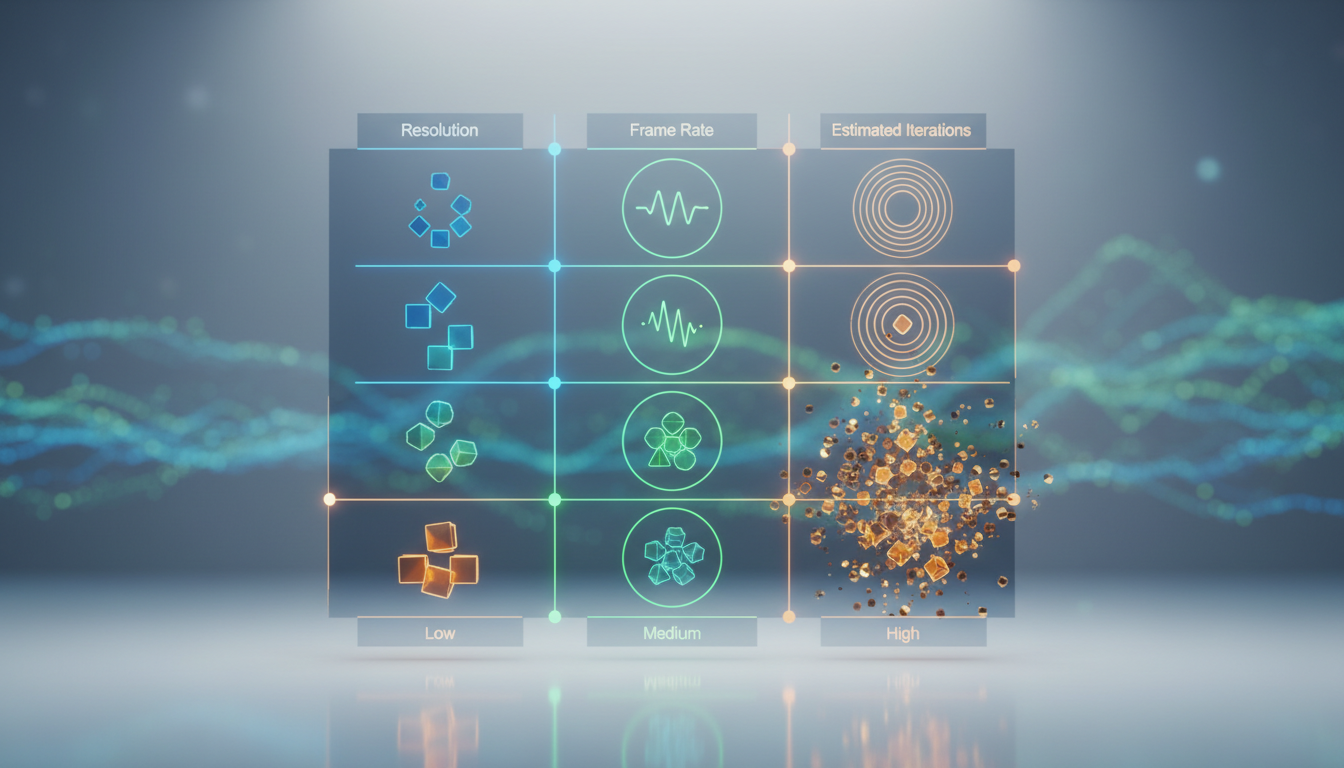
The "iteration tax" represents the reality that only one out of every three to five generations will successfully match your composition, lighting, and motion requirements. Below is an illustrative breakdown of how these iterations impact the true cost of a finished video minute, using hypothetical cost units to show relative scaling across different quality levels:
| Resolution & Quality | Nominal Cost Unit per Sec | Nominal Cost Unit per Min | Est. Iterations per Usable Shot | Realistic Cost Unit per Usable Min |
|---|---|---|---|---|
| Standard Motion | 0.50 | 30.00 | 3x | 90.00 |
| High-Fidelity | 1.00 | 60.00 | 4x | 240.00 |
| Complex Physics | 1.50 | 90.00 | 5x | 450.00 |
This table demonstrates that while the nominal cost of a high-fidelity minute sits at 60.00 units, the realistic production cost scales to 240.00 units once you account for the retakes required to correct unnatural warping, sudden camera jumps, or misaligned physics.
Comparing Single-Engine Costs to Multi-Model Pipelines
Committing to a high-tier single-engine subscription often requires pre-purchasing large credit packs to lower the unit cost per generation. However, this approach carries the risk of vendor lock-in. No single AI video engine excels at every creative task. An engine that produces exceptional cinematic landscapes might struggle with realistic human hand movements or complex text rendering. When you are locked into one platform, you are forced to spend credits trying to force an engine to perform tasks outside of its native strengths.
An alternative approach is multi-model orchestration, as seen with Montagea. Instead of restricting your production to one model, Montagea uses an AI creative agent named Gigi to evaluate your prompt and dynamically route specific shots to the most cost-effective and capable engine—whether that is Kling, Hailuo H3, or others. To evaluate if a dedicated subscription fits your pipeline, you can compare the direct costs of a dedicated engine with a multi-model workflow. By paying only for the specific model capabilities required for each individual shot, you avoid the waste of high-tier subscriptions when a simpler, more efficient model could do the job perfectly.
Practical Strategies to Prevent Credit Waste in Your Pipeline
If you choose to run your pipeline directly through a single dedicated engine, you can employ several practical strategies to keep your credit consumption manageable:
- Generate Low-Resolution Previews First: Always test your motion dynamics and camera pans at lower preview settings. Only upscale to high-fidelity modes once you have confirmed the baseline motion is correct.
- Use Image-to-Video Workflows: Generating video directly from text prompts is highly unpredictable. By using a static, curated image as a starting seed, you give the video engine a clear structural guide, reducing the number of iterations needed to get a clean layout.
- Establish a Cutoff Limit: Set a strict limit of three to five attempts per shot. If an engine fails to produce the desired motion after five attempts, it is highly likely that your prompt style conflicts with the model's training data. In these cases, it is more economical to explore other engine alternatives to balance your budget rather than continuing to burn credits on a failed concept.
Do AI video platforms offer a free trial or free monthly credits?
Many AI video platforms offer a limited set of free credits upon registration to let users test the interface. However, these credits are usually non-renewable and are intended solely for initial evaluation rather than active production workflows.
What happens to unused credits at the end of a billing cycle?
In many subscription-based AI tools, standard credits do not roll over to the next billing cycle. Any unused credits allocated as part of a monthly tier typically expire at the end of the subscription month, making it important to size plans accurately to match monthly rendering volume.
Are API generation costs different from web platform pricing?
Yes, API usage for AI generation engines is often billed on a pay-as-you-go model or through separate enterprise credit commitments. While API rates can offer lower unit costs for high-volume developers, they require technical integration and lack the user-friendly prompting tools found on web platforms.