Venice AI vs Runway: Choosing Between Private Open-Source Models and Advanced Video Production
Deciding between Venice AI and Runway depends on your workflow. Discover how to choose between private open-source models and advanced video production tools.
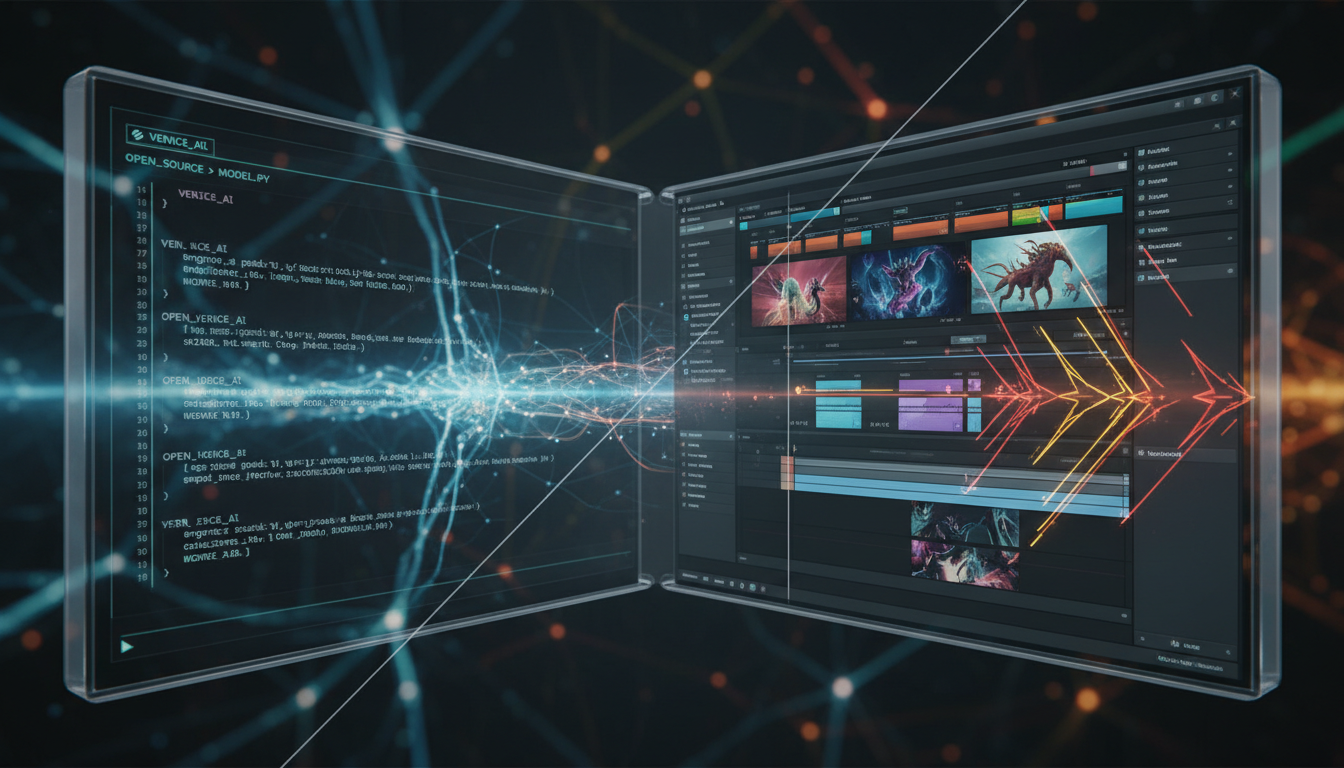
Venice AI and Runway represent different approaches to the creative pipeline. When choosing between creative platforms, the decision often comes down to whether your project requires strict data privacy and open-source flexibility or specialized video production tools. Evaluating each platform's specific model integrations and privacy policies can help you determine which fits your workflow.
Venice AI vs. Runway: The Core Architectural Split
The primary division between these types of platforms lies in their architectural philosophy and target outputs. Some platforms operate as model hubs that prioritize user privacy and open-source technology, providing gateways to various open-source models for text and image generation. These workflows are often chosen by creators who want to keep prompts and generated assets private without corporate logging or restrictive filters.
Other platforms are built specifically as creative suites powered by proprietary models designed for video production, visual effects, and cinematic storytelling. Rather than acting as general-purpose hubs, these suites often provide structured environments with timeline editing, camera controls, and motion tools, operating under standard corporate data retention policies and safety filters.
Because of this split, these tools often serve different stages of a project. One functions as a private sandbox for conceptualization, scripting, and static art generation, while the other functions as a video rendering engine designed to turn established concepts into motion assets.
Feature Comparison: Video Generation, Image Control, and Privacy
To understand where these platforms fit in your creative pipeline, it helps to analyze their feature sets side by side. While some platforms excel at text-to-image workflows, they may lack the specialized temporal-consistency engines required for modern video editing.
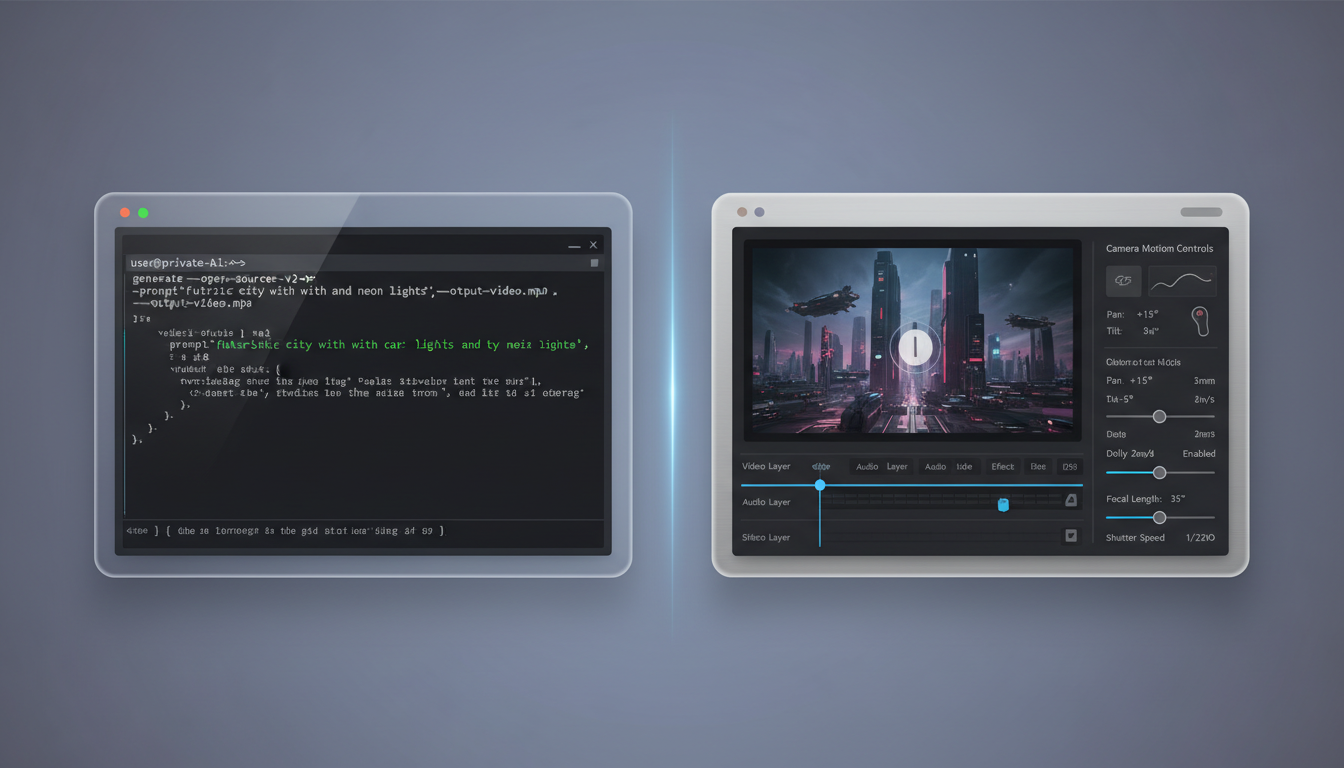
| Feature | Privacy-Focused Open-Source Hubs (e.g., Venice AI) | Proprietary Video Production Suites (e.g., Runway) |
|---|---|---|
| Primary Focus | Private text generation and static images | Video generation, editing, and motion effects |
| Video Capabilities | Often limited or absent in standard tiers | Text-to-video and camera motion control options |
| Data Privacy | Often features zero-logging or decentralized options | Standard corporate data policies and model training options |
| Content Moderation | Typically minimal or uncensored options | Standard safety filters and commercial compliance guidelines |
| Model Ecosystem | Open-source models | Proprietary closed-source models |
When evaluating these features, consider how each platform manages user data. If you want to compare the differences between Venice AI's free and paid tiers, you can evaluate how access to open-source models and API limits are structured. On the other hand, when you analyze the limits of Runway's free versus paid plans, you can compare features like video export resolutions, generation credits, and rendering speeds.
Proprietary video engines often focus on temporal consistency—the ability to keep characters, clothing, and backgrounds stable across multiple seconds of video. Conversely, open-source image models are highly regarded for static details and complex prompt adherence in images, but they may not natively offer the frame-to-frame consistency tools needed for cinematic video sequences.
Workflow Scenarios: When to Use Venice AI vs. Runway
Choosing the right tool is a matter of aligning your project's technical demands with each platform's strengths. Here is how to decide based on common production scenarios:
Scenario A: Private Ideation and Concept Development
If you are drafting a screenplay, brainstorming sensitive narrative themes, or generating initial concept art that must remain strictly proprietary, a privacy-focused platform can be a strong starting point. When a platform offers zero-logging or decentralized options, creators can work with fewer concerns about data leaks or intellectual property exposure. For creators who want to maintain this level of security throughout their creative process, it is useful to explore the best Venice AI alternatives for private workflows that support similar open-source integrations.
Scenario B: Commercial Video and VFX Production
If your end product is a commercial, a short film, or social media video content, a dedicated video production suite is often considered for its specialized timeline and motion features. Dedicated video suites typically offer camera controls (such as panning, zooming, and tracking shots) and motion tools to help direct the movement within a scene. These features are critical when you need to match a specific storyboard or integrate AI-generated clips into an existing video editing timeline.
Beyond Single Suites: The Multi-Model Orchestration Alternative
For modern creators, locking yourself into a single platform's ecosystem presents a clear tradeoff. Choosing a proprietary video suite may grant access to advanced video tools but restrict you to their proprietary models and corporate data policies. Conversely, choosing a privacy-focused hub may provide open-source flexibility but limit your ability to generate high-fidelity, production-grade video natively.
An alternative approach is multi-model orchestration. Instead of choosing a single closed ecosystem, platforms like Montagea allow you to build an agile production pipeline. Montagea's AI creative agent, Gigi, orchestrates the best available models across video, image, music, and voice to deliver finished projects based on your specific requirements. Rather than being restricted to one vendor's engine, Gigi can utilize top-tier models like Veo, Kling, Hailuo H3, and WAN to plan and execute every step of your creative brief.
When you compare a single-model suite to multi-model orchestration, the advantages of flexibility become clear. By using an orchestrator like Montagea, you can combine the open-source diversity of platforms like Venice AI with the high-end video outputs of dedicated generation engines, ensuring you always use the right tool for the right task.
Can Venice AI generate high-definition video like Runway?
When comparing creative platforms, it is important to check their current feature lists, as some tools focus primarily on text and static image generation while others specialize in video rendering. For complex video production, creators often rely on dedicated video engines or multi-model orchestration pipelines to achieve their desired results.
Do video generation platforms train their models on user-uploaded footage?
Data retention and training policies vary widely by platform and plan tier. Many services offer options to opt out of model training on enterprise or higher-tier plans, while standard or free tiers may utilize user inputs to improve their models. It is always recommended to review the specific provider's current privacy policy to confirm how your data is handled.
Are open-source platforms uncensored for creative writing and image generation?
Many platforms built on open-source models prioritize permissionless access and may not apply centralized safety filters or censorship. This can make them a preferred option for writers and artists who need to explore complex or unconventional themes, though users should always verify the specific moderation policies of the platform they choose.