The Thumb-Stop Protocol: Architecting High-Conversion AI Product Hooks for Social Ads
Discover how to leverage generative AI video tools to create high-impact, 3-second social ad hooks. Master three proven archetypes and learn to prevent product geometry drift.
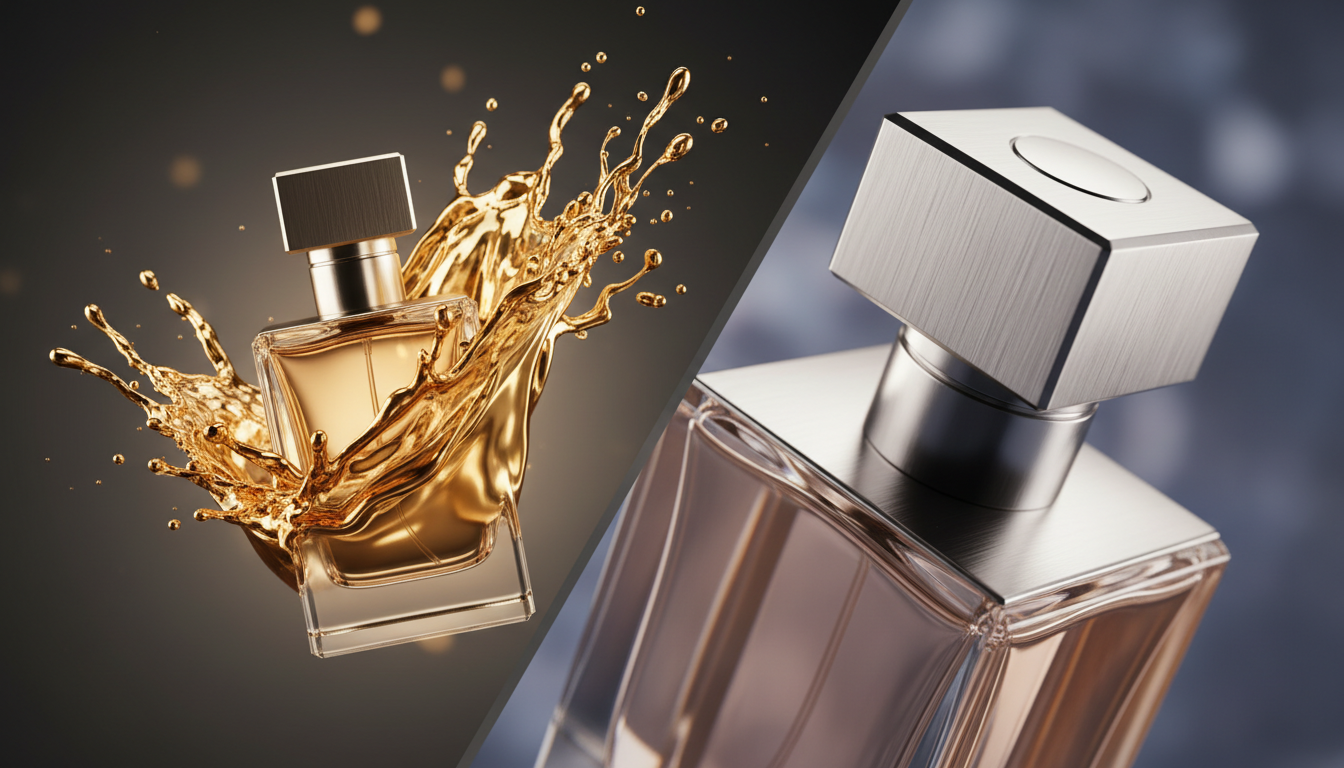
Traditional commercial video production has long relied on high-speed Phantom cameras, custom pneumatic rigs, and complex liquid simulation sets to capture the first three seconds of a social media ad. These visual hooks—where a perfume bottle bursts from a wave of liquid gold or a sneaker shatters into crystalline fragments—are notoriously expensive to execute, often consuming the majority of a brand's creative production budget. For lean marketing teams and independent agencies, the cost of physical special effects renders rapid creative testing almost impossible.
Today, generative AI video tools promise to democratize these impossible physics instantly, allowing creative teams to spin up dozens of visual concepts for rapid testing on Meta and TikTok. However, most AI-generated hooks fail in the wild because the product's geometry morphs, logos drift, and the physical asset loses its brand identity in a soup of temporal hallucinations. At Montagea, we advocate for a highly controlled, hybrid pipeline: utilizing AI to engineer visually disruptive, high-impact hooks while anchoring the generation to high-fidelity reference assets to protect product integrity.
The Anatomy of a 3-Second AI Visual Hook
In paid social advertising, the first three seconds of a video dictate up to 70% of the campaign's overall return on ad spend (ROI). If a user scrolls past your ad without registering your brand or product, the remaining 27 seconds of high-value selling points are entirely wasted. To stop the scroll, a hook must present something visually anomalous—an image or movement that violates the user's everyday expectations of physics, gravity, or material properties.
While traditional product videography struggles to produce these high-impact visual metaphors within tight budgets, AI filmmaking is uniquely suited to solve this creative bottleneck. A temporal AI model can easily simulate a glass bottle melting into sand or a cosmetic jar floating through a zero-gravity cloud of liquid pearl. However, the critical rule of commercial AI hooks is that visual disruption must never compromise product recognition. If your audience cannot identify what you are selling because the product is warping or mutating, the hook has failed its primary commercial objective.
To prevent this, the generation pipeline must begin with a pristine, un-morphed source image of the product. By utilizing our comprehensive guide on engineering precise reference images for temporal AI video engines, you establish a solid geometric anchor before initiating any motion passes. Montagea's hybrid philosophy embraces this structured approach: we use AI to generate the hyper-stylized, surreal hook for the first three seconds, and then seamlessly transition to clean, high-fidelity physical B-roll or user-generated content (UGC) for the middle and end of the ad where product trust is established.
Three High-Conversion Hook Archetypes for AI Video
Choosing the right visual metaphor depends heavily on your product category. A luxury skincare brand requires elegant, fluid transitions, whereas an activewear brand demands high-impact, explosive energy. Selecting an archetype that aligns with your brand's emotional core ensures the visual disruption feels intentional rather than gimmicky.
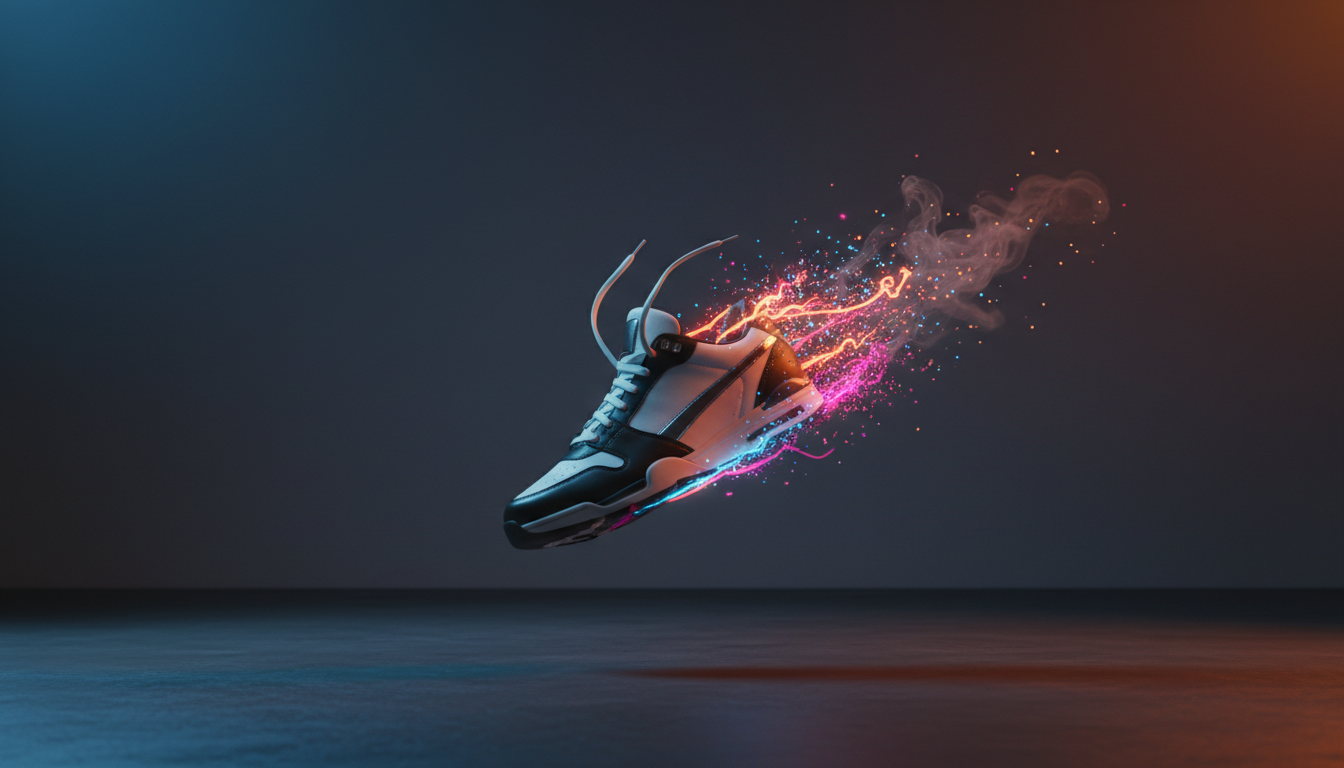
Archetype 1: The Impossible Physics Reveal
The Impossible Physics Reveal relies on fluid dynamics and material morphing to capture instant visual attention. In this archetype, the product does not simply sit on a shelf; it emerges dynamically from an unexpected material or state of matter. Imagine a sleek black mascara tube rising out of a churning wave of liquid obsidian, or a ceramic coffee mug assembling itself from a cloud of floating ceramic shards.
This approach leverages advanced physics simulation engines embedded within modern image-to-video generators. By prompting the AI to treat the surrounding environment as a fluid or a dynamic physical system, you generate high-end commercial aesthetics without a physical SFX budget. For example, utilizing our protocol for simulating high-fidelity physics in Hailuo AI allows you to achieve hyper-realistic liquid splashes and material transitions that perfectly contour around your product's boundary lines.
Archetype 2: The Hyper-Macro Camera Fly-Through
This archetype simulates an ultra-expensive probe lens moving at high speed through microscopic textures. Instead of showing the entire product immediately, the hook starts deep within the product's physical makeup—the intricate mesh of a sneaker's toe box, the creamy swirl of a moisturizer, or the metallic grooves of a watch bezel—before rapidly pulling back to reveal the full item.
This builds sensory anticipation by highlighting tactile quality. To execute this in an AI video generator, the prompt must prioritize extreme close-up camera paths and rapid acceleration. The challenge here is maintaining consistent scale and texture density so the fabric fibers or cream swirls do not dissolve into generic digital noise during the camera's retreat.
Archetype 3: The Surreal Environmental Shift
The Surreal Environmental Shift relies on the psychology of the "context jump." The video begins with the product in a familiar, sterile environment—such as a clean, minimalist studio backdrop—and, in under three seconds, radically shifts the environment around the static product. The background dissolves into a volcanic ash field, a sun-drenched desert, or a deep-ocean coral reef while the product remains perfectly centered and stable.
This archetype is highly effective for lifestyle and outdoor brands. The technical key to this transition is maintaining lighting and reflection consistency across the radical environmental shift. To achieve this, we recommend generating context-aware AI backgrounds for premium lifestyle product videos before running the final video pass, ensuring that the light bouncing off your product's surface dynamically matches the changing environment.
Technical Framework: Prompting the First 90 Frames
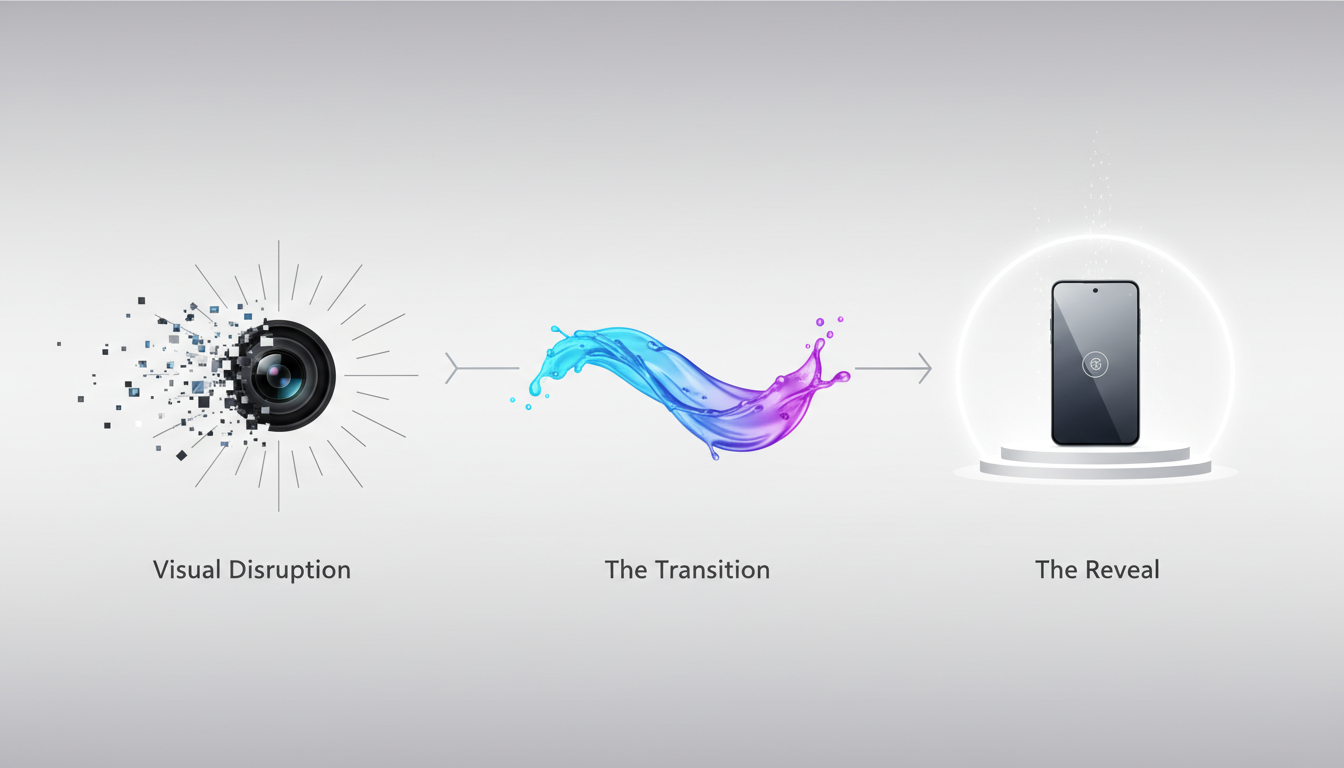
To successfully execute these archetypes across different AI video generators, you must tailor your prompting syntax to the specific strengths of each platform. Below is a comparison matrix designed to guide your tool selection and prompting structure:
| Platform | Core Strength | Ideal Archetype | Camera Control Syntax |
|---|---|---|---|
| Runway Gen-3 | High-speed camera control & macro textures | Archetype 2: Hyper-Macro Fly-Through | "Continuous fast zoom-out, probe lens path, macro texture of [material] revealing [product], photorealistic, 8k." |
| Kling AI | First/Last frame consistency & liquid physics | Archetype 1: Impossible Physics Reveal | "Slow-motion liquid splash, fluid dynamics wrapping around the static product, high-fidelity, studio lighting." |
| Luma Dream Machine | Rapid camera panning & environmental shifts | Archetype 3: Surreal Environmental Shift | "Dolly back rapidly, background morphs from white studio to volcanic desert, product remains locked in center, cinematic lighting." |
When prompting for a 3-second hook (typically 90 frames at 30fps), you must structure your motion instructions to follow a strict speed ramp. The first 30 frames (0 to 1 second) must feature hyper-speed motion—such as a fast zoom, a violent splash, or a rapid environment shift—to instantly break the user's visual pattern. The subsequent 60 frames (1 to 3 seconds) must gradually decelerate into a smooth, slow-motion reveal, allowing the viewer's eyes to adjust and focus on the static, un-morphed product. Structure your text prompt by placing high-speed camera instructions at the very front of the prompt, and material stability commands at the end.
Troubleshooting Geometry Drift in High-Motion Hooks
The most common failure point in AI-generated product videos is geometry drift. When a temporal AI model is prompted to execute high-speed camera moves or complex physics, it often struggles to maintain the spatial consistency of the product. The bottle cap might warp, the logo might dissolve into gibberish, or the product's proportions might shift as the camera pans. This occurs because the AI model is prioritizing temporal motion over geometric accuracy.
To combat this, professional creators use a "reverse-generation" or "sandwich" generation technique. By mastering Kling's first and last frame workflow, you can upload your pristine, un-morphed product shot as the final frame of the video, while uploading a highly stylized, abstract version of your product (or just the background) as the first frame. The AI is then forced to resolve the visual chaos of the hook directly into your perfect, brand-compliant product shot by frame 90.
If you are using a platform that does not support first-and-last-frame keyframing, you can resolve geometry drift in post-production. Simply export the final, cleanest frame of your AI generation into Photoshop, align your original high-resolution product photo directly over it, and create a subtle mask. In your editing timeline, overlay this static, high-res product mask over the final 15–30 frames of your video. This guarantees that when the high-speed motion of the hook decelerates to a stop, your viewer is looking at a flawless, brand-approved representation of your product.
How do I prevent my product's logo from morphing or disappearing in an AI-generated hook?
To keep logos and branding elements from morphing, use a hybrid workflow. Generate the high-motion background and environmental physics using AI, but keep the product itself on a separate, masked layer. Alternatively, use Kling's first/last frame workflow with a high-resolution reference image of your product as the final frame, or manually mask a static high-res product photo over the final, stabilized frames of your video in post-production.
What is the best AI video generator for creating high-speed liquid and splash effects?
Hailuo AI (Minimax) and Kling AI currently lead the industry in fluid dynamics and material physics simulation. Hailuo AI is highly effective for explosive, high-velocity liquid splashes, while Kling AI offers superior control when you need a liquid substance to smoothly wrap around or reveal a specific product shape.
How long should a social ad hook be when generated with AI?
A social ad hook should be exactly 2 to 3 seconds long (60 to 90 frames). The first 1 second must feature high-speed, visually disruptive motion to stop the scroll, while the remaining 1 to 2 seconds should smoothly decelerate to reveal the product in sharp, clear, and stable detail.
Can I use AI to generate a product hook if I only have a flat 2D photo of my product?
Yes. You can use a high-quality 2D photo as an image input (I2V) in platforms like Runway Gen-3, Luma, or Kling. By prompting the camera to move relative to the image (e.g., "3D camera orbit" or "macro zoom"), the AI will project your 2D photo into 3D space, simulating realistic depth, lighting, and camera parallax.